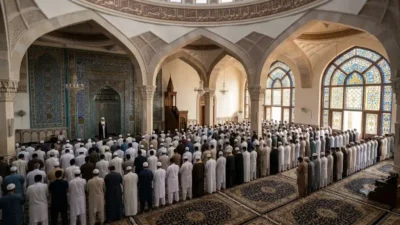
There is something special about the few moments after sunset. The busy day comes to an end, the sky changes color, and everything feels a little quieter.
For Muslims, this peaceful time is a reminder to pause, turn to Allah SWT, and perform Maghrib prayer. I remember learning Maghrib Salah when I was young.
At first, I was afraid I would forget the order of the prayer, but with regular practice, it became one of the easiest and most comforting prayers of my day.
If you are searching for how to pray Maghrib step by step, this guide is written for you. Whether you are a beginner, a new Muslim, or someone who wants a simple refresher, you will learn each step in clear and easy English.
By the end of this article, you will understand the correct way to perform Maghrib Salah, the number of Rak’ahs, and a few helpful tips to improve your prayer with confidence.
What Is Maghrib Prayer?
Maghrib is the fourth of the five daily obligatory prayers in Islam. It begins immediately after the sun has completely set and remains until the evening twilight disappears. Allah says in the Quran:
“Indeed, prayer has been decreed upon the believers at specified times.” (Quran 4:103)
Maghrib prayer reminds Muslims to thank Allah SWT for the blessings of the day and seek His guidance before the night begins.
The prayer consists of:
- 3 Fard Rak’ahs (Obligatory)
- 2 Sunnah Rak’ahs (Highly recommended after the Fard prayer)
- Optional Nafl Rak’ahs for extra reward
For beginners, learning the three obligatory Rak’ahs is the first priority.
How to Pray Maghrib for Beginners
- Make wudu and face the Qiblah.
- Make the intention for Maghrib prayer.
- Begin with Takbir: Allahu Akbar.
- Recite Surah Al-Fatihah in the first rak‘ah.
- Add another Surah or verses after Al-Fatihah.
- Perform ruku‘ and say Subhana Rabbiyal Adheem.
- Complete the first rak‘ah with two sujood.
- Repeat the basic steps for the second rak‘ah.
- Complete the third rak‘ah and sit for the final Tashahhud.
- End the prayer by turning right and left and saying Salam.
Maghrib Prayer 3 Rakat Step by Step
- Start the first rak‘ah with Takbiratul Ihram.
- Recite the opening supplication if you know it.
- Recite Surah Al-Fatihah and another Surah.
- Perform ruku‘ followed by two sujood.
- Stand for the second rak‘ah.
- Recite Al-Fatihah and another Surah in the second rak‘ah.
- Sit for the first Tashahhud after two rak‘ahs.
- Stand for the third rak‘ah and recite Al-Fatihah.
- Complete the final ruku‘, sujood, Tashahhud, and salawat.
- Finish the three-rak‘ah prayer with Salam.
How to Pray Maghrib Namaz for Female
- Make wudu and wear clean, modest prayer clothing.
- Face the Qiblah and make the intention.
- Begin the prayer with Allahu Akbar.
- Recite Al-Fatihah and another Surah in the first rak‘ah.
- Perform ruku‘ and two sujood calmly.
- Complete the second rak‘ah in the same manner.
- Sit for Tashahhud after the second rak‘ah.
- Stand for the third rak‘ah and recite Al-Fatihah.
- Complete the final sitting with Tashahhud and Salawat.
- End the prayer with Salam to both sides.
How to Pray Maghrib and Isha Together
- Combining Maghrib and Isha is permitted in certain circumstances.
- Travelers may combine these prayers according to Islamic rulings.
- Maghrib is prayed first when combining the two prayers.
- Maghrib consists of three obligatory rak‘ahs.
- After Maghrib, Isha is prayed with its required rak‘ahs.
- The intention should be made appropriately for each prayer.
- Each prayer remains a separate act of worship.
- Do not combine prayers simply for convenience without a valid reason.
- The details can differ according to the situation and school of Islamic law.
- Ask a trusted qualified scholar if you are unsure whether combining applies to you.
Maghrib Prayer Words
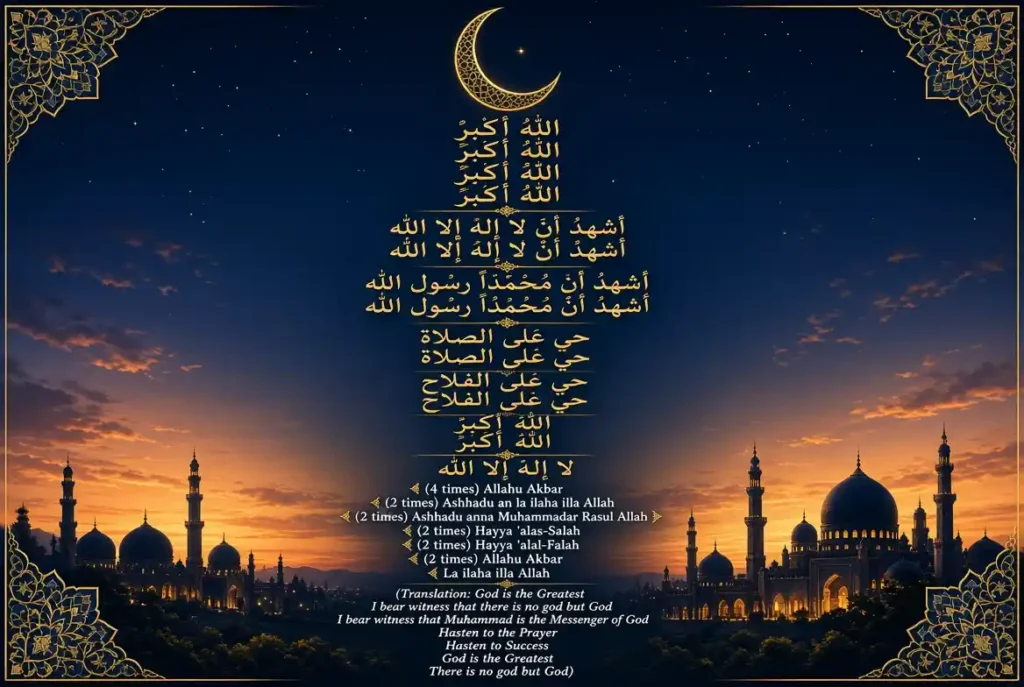
- Allahu Akbar is said when beginning the prayer.
- The opening supplication may be recited after the first Takbir.
- Surah Al-Fatihah is recited in every rak‘ah.
- An additional Surah or Quranic verses are recited in the first two rak‘ahs.
- Subhana Rabbiyal Adheem is said during ruku‘.
- Sami‘Allahu liman hamidah is said when rising from ruku‘.
- Rabbana wa lakal hamd is recited after rising.
- Subhana Rabbiyal A‘la is said during sujood.
- Tashahhud and Salawat are recited during the final sitting.
- The prayer ends with Assalamu Alaikum wa Rahmatullah.
How to Pray Maghrib Sunnah
- Learn the Sunnah prayers connected with Maghrib.
- The emphasized Sunnah after Maghrib consists of two rak‘ahs.
- Pray the two Sunnah rak‘ahs after completing the three fard rak‘ahs.
- Make the intention for the Sunnah prayer.
- Begin each rak‘ah with Allahu Akbar.
- Recite Al-Fatihah and additional Quranic verses.
- Perform ruku‘ and sujood with calmness.
- Complete the second rak‘ah with the final sitting.
- Recite Tashahhud and Salawat before Salam.
- Try to maintain this Sunnah regularly when possible.
How to Pray Maghrib Fard
- Maghrib has three obligatory fard rak‘ahs.
- Make wudu before beginning the prayer.
- Face the Qiblah and make the intention for three fard rak‘ahs.
- Begin with Takbiratul Ihram.
- Recite Al-Fatihah and another Surah in the first rak‘ah.
- Repeat Al-Fatihah and another Surah in the second rak‘ah.
- Sit for Tashahhud after the second rak‘ah.
- Stand for the third rak‘ah and recite Al-Fatihah.
- Complete the final sitting with Tashahhud and Salawat.
- Finish the prayer with Salam.
How to Pray Maghrib 7 Rakat
- Maghrib fard itself is three rak‘ahs.
- It is not correct to describe the standard Maghrib prayer as seven fard rak‘ahs.
- The three fard rak‘ahs are obligatory.
- Two Sunnah rak‘ahs are commonly prayed after Maghrib.
- Additional voluntary nafl prayers may also be offered.
- Nafl prayers are separate from the three fard rak‘ahs.
- The exact total can vary when voluntary prayers are included.
- Do not treat voluntary rak‘ahs as part of the three-rak‘ah fard prayer.
- Beginners should first learn the three fard rak‘ahs correctly.
- Ask a qualified Islamic teacher if you have questions about different prayer combinations.
Before You Begin Maghrib Prayer
Before standing for Salah, make sure you have completed these important preparations:
- Perform Wudu (ablution) properly.
- Wear clean and modest clothing.
- Pray in a clean place.
- Face the Qiblah, the direction of the Ka’bah in Makkah.
- Make sure Maghrib time has started.
- Make a sincere intention (Niyyah) in your heart to pray for the sake of Allah SWT.
These conditions help prepare both your body and your heart for worship.
How to Pray Maghrib Step by Step
First Rak’ah
Stand facing the Qiblah and make the intention in your heart to pray three Fard Rak’ahs of Maghrib.
Raise both hands and say:
Allahu Akbar
Place your hands in the prayer position according to your school of thought.
Recite:
- Opening supplication (if known)
- A’udhu billahi minash shaytanir rajim
- Bismillahir Rahmanir Rahim
- Surah Al-Fatihah
- Another short Surah, such as Surah Al-Ikhlas, Al-Falaq, or An-Nas
Then say Allahu Akbar and bow into Ruku.
While bowing, recite:
Subhana Rabbiyal Azeem (three times)
Stand up and say:
Sami’ Allahu liman hamidah
Then:
Rabbana lakal hamd
Go into Sujood and recite:
Subhana Rabbiyal A’la (three times)
Sit briefly and perform the second Sujood.
Your first Rak’ah is now complete.
Second Rak’ah
Stand again and recite Surah Al-Fatihah followed by another short Surah.
Repeat the Ruku and the two Sujood exactly as before.
After the second Sujood, remain seated and recite At-Tashahhud.
After completing Tashahhud, stand up for the third Rak’ah.
Third Rak’ah
Recite Surah Al-Fatihah only.
Unlike the first two Rak’ahs, another Surah is not recited in the third Fard Rak’ah.
Complete the Ruku and both Sujood.
Sit for the final Tashahhud.
Recite:
- At-Tashahhud
- Salawat upon Prophet Muhammad ﷺ
- Any authentic supplication you know
Finish the prayer by turning your head to the right and saying:
Assalamu Alaikum wa Rahmatullah
Then turn to the left and repeat the same words.
Your Maghrib prayer is now complete.
Common Mistakes to Avoid
Everyone makes mistakes while learning. The important thing is to keep improving.
Some common mistakes include:
- Rushing through the prayer without concentration.
- Forgetting Surah Al-Fatihah.
- Praying before Maghrib time begins.
- Not facing the Qiblah correctly.
- Skipping Tashahhud.
- Moving too quickly between Ruku and Sujood.
Take your time and remember that Allah SWT rewards sincere effort.
Benefits of Praying Maghrib Regularly

Praying Maghrib every evening offers many spiritual benefits.
It strengthens your relationship with Allah SWT and gives you a chance to thank Him after a busy day. It also helps you develop discipline, patience, and gratitude. Many Muslims find that taking a few quiet moments for prayer after sunset brings comfort and peace, even during stressful times.
The Prophet Muhammad ﷺ encouraged believers to guard their daily prayers because they are among the greatest acts of worship. Making Maghrib a daily habit can bring consistency to your faith and remind you to end each day with the remembrance of Allah.
Tips for Beginners
If you are still learning, don’t worry. Every Muslim starts somewhere.
Here are a few simple tips:
- Learn one step at a time.
- Practice your recitation every day.
- Listen to Quran recitation to improve pronunciation.
- Pray with family or at your local mosque when possible.
- Ask Allah SWT to make learning easy.
With patience and regular practice, each prayer will become more natural and meaningful.
Conclusion
Learning how to pray Maghrib step by step is one of the best ways to strengthen your connection with Allah SWT. The prayer may seem challenging at first, but every sincere effort is valuable in the sight of Allah. Focus on understanding each step instead of trying to become perfect overnight. Make Maghrib prayer a part of your daily routine. As you stand before Allah each evening, remember that every prayer is an opportunity to seek His mercy, thank Him for His blessings, and ask for guidance in your life.
May Allah SWT accept your Salah, increase your faith, forgive your shortcomings, and fill your heart with peace and contentment. Ameen.

PrayerLoomz is a faith-centered platform dedicated to helping Muslims find meaningful prayers, duas, Quranic guidance, and Islamic reminders for everyday life. Our content is written with respect for Islamic teachings and aims to provide simple, reliable, and spiritually uplifting guidance for Muslims around the world. We focus on prayers for different life situations, Islamic duas, Quran verses, authentic Hadith references, and practical faith-based reminders. Our goal is to make Islamic knowledge easier to understand while encouraging readers to strengthen their connection with Allah SWT. At PrayerLoomz, we value accuracy, sincerity, and respectful presentation of Islamic teachings. We encourage readers to verify matters of religious ruling with qualified Islamic scholars when necessary.