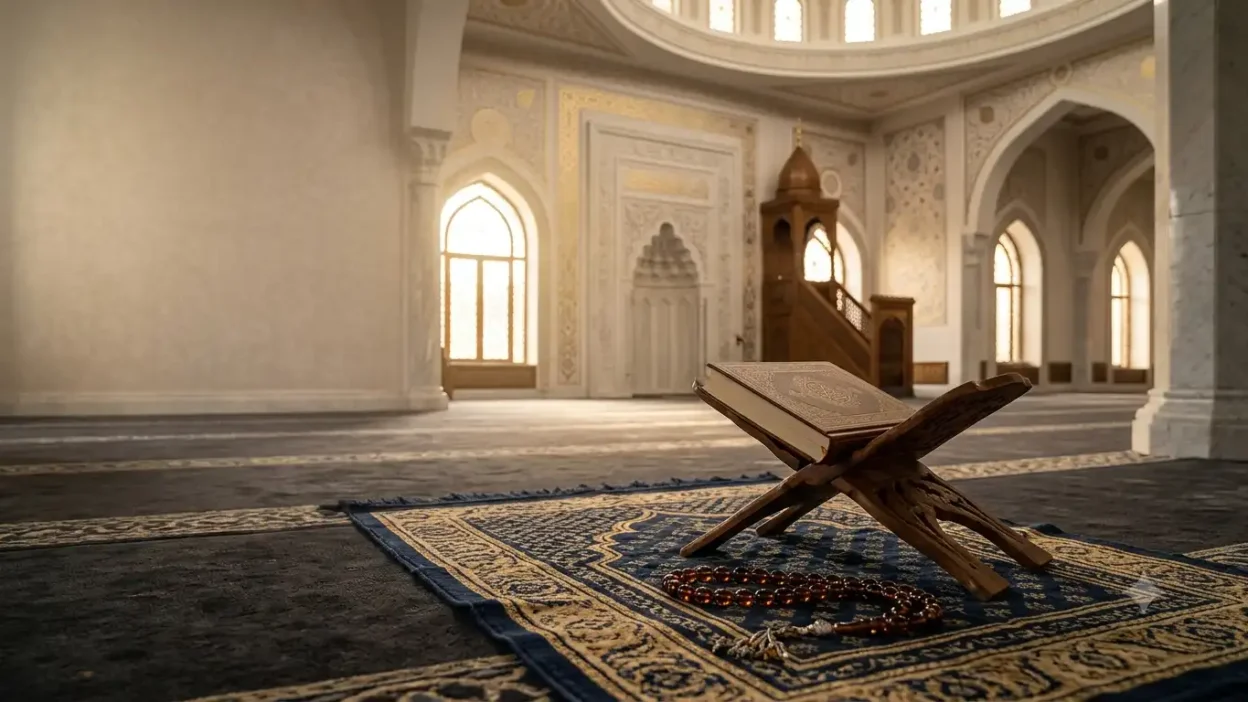
There is something peaceful about the few moments after salah. The prayer has ended, the world is still outside, and for a moment your heart feels close to Allah SWT.
I remember how easy it can be to stand up quickly after salah because of work, family, or daily responsibilities. But those quiet moments after prayer can become some of the most meaningful moments of the day.
If you are searching for adhkar after prayer, this guide is written for you. These simple acts of remembrance can help you stay connected to Allah SWT after completing your salah. They can also bring gratitude, repentance, protection, and peace into your daily life.
The Prophet Muhammad ﷺ taught his companions specific words of remembrance after the obligatory prayers. These adhkar are short enough to learn and powerful enough to become part of your daily routine.
Rather than rushing away after salah, take a few minutes. Sit quietly, remember Allah, and let your heart remain connected to the One you just worshipped.
1. Adhkar After Prayer for Seeking Forgiveness
One of the first things the Prophet Muhammad ﷺ would do after completing salah was seek forgiveness from Allah SWT.
He would say:
أَسْتَغْفِرُ اللهَ
Astaghfirullah
I seek forgiveness from Allah.
This is said three times. The Prophet ﷺ then said:
اللَّهُمَّ أَنْتَ السَّلَامُ وَمِنْكَ السَّلَامُ تَبَارَكْتَ يَا ذَا الْجَلَالِ وَالإِكْرَامِ
Allahumma antas-salam, wa minkas-salam, tabarakta ya dhal-jalali wal-ikram.
O Allah, You are Peace, and from You comes peace. Blessed are You, O Possessor of Majesty and Honor.
This authentic remembrance is reported in Sahih Muslim 591.
Seeking forgiveness after salah teaches us humility. Even after worshipping Allah, we recognize our weaknesses and ask Him to forgive our mistakes.
A simple personal dua:
O Allah, forgive my mistakes, my shortcomings, and the sins I remember and those I have forgotten. Accept my prayer and do not let my heart turn away after I have worshipped You. Ameen.
2. Adhkar After Prayer for Peace of Heart
Many people finish salah while carrying stress from work, money, family, studies, or personal problems. This is where spiritual adhkar after prayer can become deeply meaningful.
The words Allahumma antas-salam remind us that true peace comes from Allah SWT. We may search for peace in many places, but lasting peace is ultimately in His hands.
After saying Astaghfirullah three times, recite the supplication with attention and understanding.
Think about the meaning:
Allah is Peace. From Him comes peace.
Let those words settle in your heart.
A personal dua:
O Allah, place peace in my heart. Remove the fear that I cannot explain and the worries that I cannot solve. Help me trust Your wisdom when I do not understand Your plan. Give me a calm heart and make me content with what You have decreed for me. Let my salah continue to comfort me long after I leave the prayer mat. Ameen.
This is one reason a daily adhkar after prayer routine can be so valuable. It gives you a quiet spiritual pause before returning to your responsibilities.
3. Powerful Adhkar After Prayer for Gratitude
One authentic form of adhkar after prayer is to praise Allah SWT through tasbih, tahmid, and takbir.
The Prophet ﷺ taught that after the prescribed prayers, a person may say:
SubhanAllah
Glory be to Allah
33 times
Alhamdulillah
All praise belongs to Allah
33 times
Allahu Akbar
Allah is the Greatest
34 times
This narration is recorded in Sahih Muslim 596.
Another authentic narration describes saying each of the first three phrases 33 times and then completing 100 with:
La ilaha illallahu wahdahu la sharika lah, lahul-mulku wa lahul-hamd, wa huwa ‘ala kulli shay’in qadir.
There is no god but Allah alone, without a partner. His is the dominion and His is the praise, and He is over all things capable.
Personal dua:
O Allah, make me grateful for the blessings I often overlook. Help me appreciate my family, health, time, faith, food, shelter, and every small blessing You have given me. Keep my tongue busy with Your remembrance and my heart full of gratitude. Ameen.
4. Adhkar After Prayer for Strength and Protection
Life can make us feel weak. Some days bring emotional pressure, difficult decisions, temptation, or fear about the future.
After salah, remembering Allah can help you turn your heart back toward Him.
Among the authentic practices is reciting the Mu’awwidhat, the protective surahs of the Qur’an. The Prophet ﷺ instructed ‘Uqbah ibn ‘Amir to recite them after every prayer. This is reported in Sunan Abi Dawud 1523.
The Mu’awwidhat include Surah Al-Ikhlas, Surah Al-Falaq, and Surah An-Nas according to the narration’s wording and related reports.
A personal dua:
O Allah, protect me from every form of harm. Protect my faith, my family, my home, and my heart. Keep me safe from evil that I can see and evil that I cannot see. Give me strength when I feel weak and courage when I feel afraid. Help me depend upon You alone. Ameen.
Make this adhkar for strength part of your routine, especially when your heart feels unsettled.
5. Adhkar After Prayer for Protection Through Ayat al-Kursi
Another important remembrance connected with the obligatory prayer is Ayat al-Kursi, the famous verse from Surah Al-Baqarah, verse 255.
A narration attributed to Abu Umamah reports that whoever recites Ayat al-Kursi after every obligatory prayer has a great virtue, with nothing preventing entry into Paradise except death. The report is cited in collections including al-Nasa’i, and Ibn Hibban graded it authentic.
Ayat al-Kursi reminds the believer of Allah’s perfect knowledge, power, authority, and protection.
When you recite it, do not think of it as simply completing a checklist.
Pause.
Think about the greatness of Allah SWT.
Personal dua:
O Allah, You know everything hidden and visible. You know my fears, my needs, and my struggles. Protect me through Your mercy. Keep my heart firm upon faith and protect me from anything that pulls me away from You. Let the Qur’an become a source of light and guidance in my life. Ameen.
For someone building a short adhkar after prayer routine, Ayat al-Kursi can be an especially meaningful addition.
6. Adhkar After Prayer for Forgiveness and a New Beginning
Salah gives us a chance to return to Allah again and again.
Perhaps you made mistakes during the day. Perhaps you spoke harshly to someone. Perhaps you missed an opportunity to do good. Maybe you are carrying guilt that nobody else knows about.
Do not let that guilt make you give up.
Say:
Astaghfirullah.
Then say it again.
And again.
The Prophet ﷺ himself sought Allah’s forgiveness after salah.
This teaches us something beautiful: worship should make us humble, not proud.
Personal dua:
O Allah, I come to You with my weaknesses and mistakes. I cannot hide anything from You. Forgive me for what I have done wrong. Help me learn from my mistakes instead of repeating them. Give me the strength to apologize when I hurt someone and the courage to change when I know I need to change. Let every salah be a new beginning for me. Ameen.
Your past does not have to control your future. Turn back to Allah with sincerity.
7. Adhkar After Prayer for a Stronger Faith
Faith needs care.
Just as the body needs food, the heart needs remembrance of Allah SWT. This is why daily adhkar after prayer can become more than a routine. They can become spiritual nourishment.
When you repeatedly say SubhanAllah, Alhamdulillah, and Allahu Akbar, you remind yourself of who Allah is.
SubhanAllah teaches you to recognize His perfection.
Alhamdulillah teaches gratitude.
Allahu Akbar reminds you that Allah is greater than everything that worries you.
Personal dua:
O Allah, strengthen my iman. Do not let worldly distractions take me away from You. Make me love salah, love the Qur’an, and love remembering You. When my faith feels weak, bring me back to You. When life becomes easy, keep me grateful. When life becomes difficult, keep me patient. Ameen.
You do not need complicated words. Sometimes a few sincere words repeated every day can transform your relationship with Allah.
8. Adhkar After Prayer for Family and Loved Ones
After salah, you may also make personal dua for your family, friends, and people you care about.
The established adhkar should be learned from the Sunnah, while personal supplication can be made in your own words.
Think about the people Allah has placed in your life.
Your parents.
Your spouse.
Your children.
Your friends.
Someone who is sick.
Someone who is struggling silently.
Someone who may have lost their way.
Personal dua:
O Allah, bless my family and protect the people I love. Give my parents mercy and goodness. Guide my children and make them righteous. Put love and understanding between spouses. Help those in my family who are facing hardship. Heal those who are sick and comfort those who are sad. Bring us closer to You and make our homes places of faith, kindness, and peace. Ameen.
These moments can make your prayer life more personal. You are not only remembering Allah for yourself. You are also asking Him to care for those you love.
9. Adhkar After Prayer for Guidance in Daily Life
We make choices every day.
Some are small. Some can change our lives.
We may wonder which job to take, how to handle a family problem, what decision to make, or how to respond when someone hurts us.
After salah is a beautiful time to turn to Allah and ask for guidance.
Remembering Allah does not mean we stop taking practical steps. Islam teaches us to worship Allah while also making responsible choices.
Personal dua:
O Allah, guide me toward what is good for my faith and my life. If I am confused, make the right path clear. If I am about to make a harmful choice, turn me away from it. Give me wisdom before I speak and patience before I act. Help me trust You while doing my best. Do not let my desires lead me away from what pleases You. Ameen.
This kind of spiritual adhkar after prayer can help create a habit of turning to Allah before becoming overwhelmed by life’s problems.
10. Adhkar After Prayer for a Consistent Daily Routine
The greatest challenge is often not learning adhkar. It is staying consistent.
You may start with enthusiasm and then become busy.
One day you remember.
The next day you forget.
Do not give up.
Start again.
A simple routine can include:
- Astaghfirullah three times
- Allahumma antas-salam…
- Ayat al-Kursi
- SubhanAllah 33 times
- Alhamdulillah 33 times
- Allahu Akbar 34 times
- The appropriate protective surahs from the Sunnah
These practices are supported by authentic or well-established narrations discussed above.
Personal dua:
O Allah, help me remember You every day. Do not let me become careless with salah or the moments that follow it. Make Your remembrance easy for my tongue and beloved to my heart. Give me consistency, sincerity, and patience. Let these small acts become a source of great goodness in my life. Ameen.
You do not have to become perfect overnight. Begin with what you can maintain.
How to Build a Simple Adhkar After Prayer Routine
If you are new to adhkar after prayer, do not feel pressured to memorize everything at once.
Start with the most basic Sunnah remembrance.
Step 1: Finish your salah and say Astaghfirullah three times.
Step 2: Recite Allahumma antas-salam wa minkas-salam…
Step 3: Add Ayat al-Kursi.
Step 4: Learn the 33-33-34 tasbih routine.
Step 5: Learn the protective surahs mentioned in the Sunnah.
Once you know them, focus on their meanings.
Do not let counting become the only goal. The purpose of dhikr is to remember Allah with the heart and tongue.
If you miss your routine one day, simply begin again at the next prayer.
Why Adhkar After Prayer Matter
The moments after salah can easily disappear.
You check your phone.
You answer a message.
You rush to work.
You start preparing food.
You move to the next responsibility.
But the Sunnah teaches us that the end of salah is also a time for remembrance. The Prophet ﷺ taught specific adhkar after the prescribed prayers, including seeking forgiveness and praising Allah.
These acts can help you develop gratitude, humility, remembrance, and reliance upon Allah.
They are also practical. Most of them take only a few minutes.
The goal is not to create a complicated spiritual schedule.
The goal is to keep your heart connected to Allah throughout the day.
Conclusion
Adhkar after prayer is a beautiful part of the Sunnah. They give us a chance to remain connected to Allah SWT after completing salah instead of immediately returning to the noise of daily life. The Prophet Muhammad ﷺ taught his companions simple and meaningful words of remembrance. These include seeking forgiveness, praising Allah, declaring His greatness, reciting Qur’anic verses, and asking Allah for protection and peace.
You do not need to learn everything in one day. Start small. Learn one dhikr. Understand its meaning. Practice it after every obligatory prayer. Then add another. Over time, these short moments can become one of the most peaceful parts of your day. Alhamdulillah, every prayer gives you another opportunity to remember your Lord. So when your next salah ends, do not rush.
Sit for a moment. Breathe. Remember Allah. Ask for forgiveness. Thank Him. And trust Him. May Allah SWT accept our prayers, forgive our sins, strengthen our iman, protect our families, and make us among those who remember Him often. Ameen.
FAQs About Adhkar After Prayer
1. What is the main adhkar after prayer?
The main Sunnah adhkar includes saying Astaghfirullah three times, followed by Allahumma antas-salam wa minkas-salam… Other established remembrances include tasbih, tahmid, takbir, Ayat al-Kursi, and protective surahs.
2. How many times should I say SubhanAllah after prayer?
One authentic practice is to say SubhanAllah 33 times, Alhamdulillah 33 times, and Allahu Akbar 34 times after each prescribed prayer.
3. Should I make dua after adhkar?
Yes. After completing the established adhkar, you can make personal dua and ask Allah SWT for anything good. Ask Him for guidance, forgiveness, protection, family wellbeing, and help with your needs.
4. Is Ayat al-Kursi part of adhkar after prayer?
There is a narration stating that whoever recites Ayat al-Kursi after every obligatory prayer has a great virtue. The report is cited by al-Nasa’i and was authenticated by Ibn Hibban.
5. What if I forget my adhkar after prayer?
Do not become discouraged. If you forget, simply make an effort to remember at the next prayer. Consistency grows slowly. Allah SWT knows your effort and sincerily.

PrayerLoomz is a faith-centered platform dedicated to helping Muslims find meaningful prayers, duas, Quranic guidance, and Islamic reminders for everyday life. Our content is written with respect for Islamic teachings and aims to provide simple, reliable, and spiritually uplifting guidance for Muslims around the world. We focus on prayers for different life situations, Islamic duas, Quran verses, authentic Hadith references, and practical faith-based reminders. Our goal is to make Islamic knowledge easier to understand while encouraging readers to strengthen their connection with Allah SWT. At PrayerLoomz, we value accuracy, sincerity, and respectful presentation of Islamic teachings. We encourage readers to verify matters of religious ruling with qualified Islamic scholars when necessary.