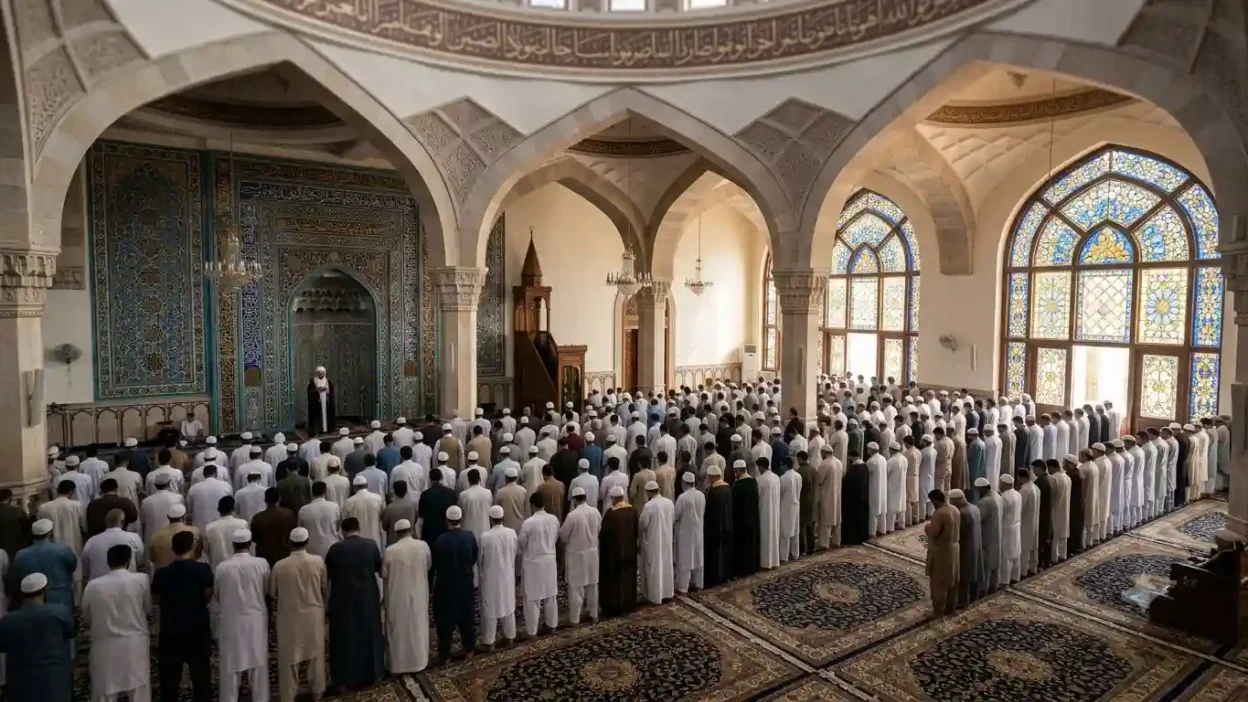
Every Friday, I remember walking into the mosque with my father. The atmosphere felt different from any other day. Brothers greeted one another with smiles, the recitation of the Qur’an filled the air, and everyone eagerly waited for the Jumu’ah prayer to begin.
Those moments taught me that Friday is more than just another day. It is a special gift from Allah SWT that brings Muslims together in worship.
If you are searching for how to pray Jumu’ah, this guide is written just for you. Whether you are a new Muslim, returning to your faith, or simply want to refresh your knowledge, this article explains everything in clear and simple words.
Learning the Friday prayer can help you strengthen your relationship with Allah, feel connected to your local Muslim community, and gain peace in your daily life.
By following these easy steps, you can perform Jumu’ah with confidence and understanding.
What Is Jumu’ah Prayer?
Jumu’ah is the special congregational prayer performed every Friday instead of the regular Dhuhr prayer. Adult Muslim men who meet the Islamic conditions are required to attend it, while women may attend if they wish and doing so is practical and appropriate.
The Friday prayer includes:
- A Khutbah (sermon) delivered by the Imam.
- Two rak’ahs prayed in congregation after the sermon.
- Listening carefully to the Khutbah as an act of worship.
Allah says in the Qur’an:
“O you who believe! When the call is made for prayer on Friday, hasten to the remembrance of Allah and leave trade.”
(Surah Al-Jumu’ah 62:9)
This verse reminds Muslims to leave worldly activities and answer Allah’s call every Friday.
Jumu’ah Prayer Time: When Does Friday Prayer Start and End?
- Jumu’ah prayer is performed on Friday during the time of Dhuhr.
- The exact Jumu’ah time varies from one mosque and location to another.
- Check your local mosque for the Friday prayer schedule.
- The khutbah takes place before the two-rak’ah Jumu’ah prayer.
- Muslims should arrive early enough to listen to the khutbah.
- The prayer should be performed after the khutbah is completed.
- Jumu’ah replaces the regular Dhuhr prayer for those who perform it.
- Women who do not attend Jumu’ah may pray Dhuhr at home.
- Travelers and people with valid excuses may have different rulings.
- If you are unsure about the exact time, follow your local mosque’s timetable.
How Many Rakats in Jumu’ah Prayer at Home?
- Jumu’ah is not performed individually at home like the congregational Friday prayer.
- A person praying alone at home should pray Dhuhr instead.
- Dhuhr consists of four obligatory rak’ahs.
- This applies to a woman who does not attend Jumu’ah at the masjid.
- A woman is not required to establish a separate Jumu’ah prayer at home.
- The two-rak’ah Jumu’ah prayer is performed with the congregation and imam.
- If a woman joins Jumu’ah at the masjid, she prays two rak’ahs with the imam.
- If she remains at home, she performs four rak’ahs of Dhuhr.
- Additional Sunnah prayers may also be performed according to one’s school of thought.
- If you follow a particular madhhab, consult a trusted scholar for detailed Sunnah practices.
How to Pray Jumu’ah Namaz Step by Step for Ladies
- Make wudu and prepare for prayer with clean clothing and a suitable place.
- If attending the masjid, observe Islamic modesty and avoid perfume or unnecessary adornment.
- Arrive early and sit quietly while waiting for the khutbah.
- Listen attentively to the khutbah without unnecessary conversation.
- Follow the imam when the two-rak’ah Jumu’ah prayer begins.
- Pray two rak’ahs with the imam, just as the congregation does.
- Follow the imam’s movements from standing to ruku and sujood.
- Complete the prayer with the imam’s final salam.
- If you do not attend Jumu’ah, pray four rak’ahs of Dhuhr at home instead.
- A woman who prays Jumu’ah with the imam does not need to repeat Dhuhr afterward.
How Many Rakats in Jumu’ah Prayer at Masjid?
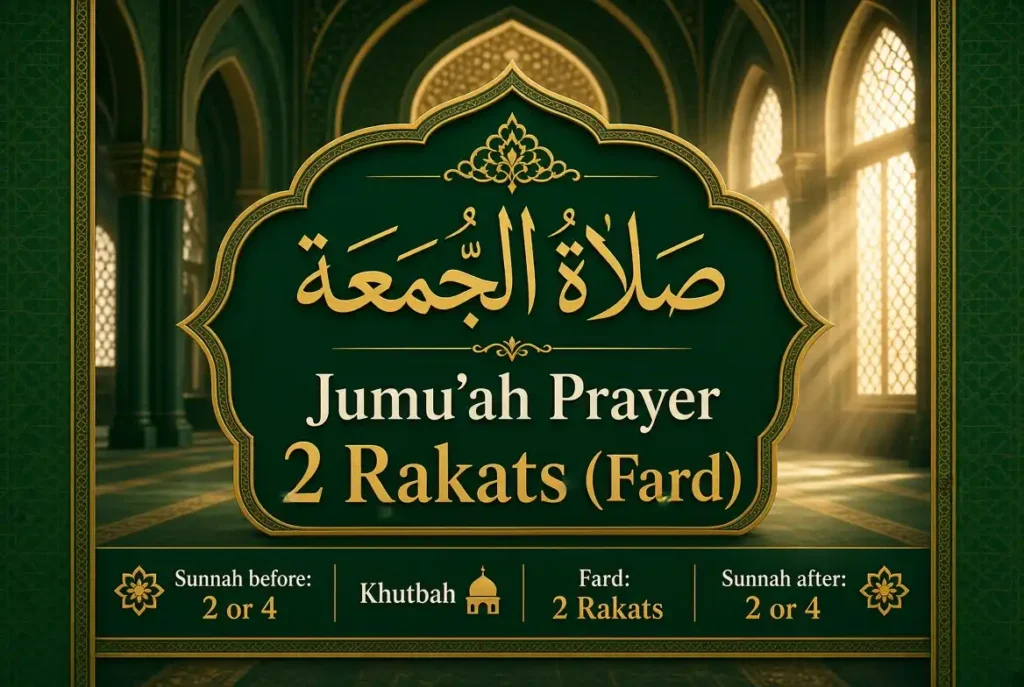
- The Jumu’ah prayer itself consists of two obligatory rak’ahs.
- These two rak’ahs are performed after the khutbah.
- The prayer is led by the imam.
- Men who are required to attend Jumu’ah pray these two rak’ahs with the congregation.
- Women who attend the masjid also pray two rak’ahs with the imam.
- Jumu’ah takes the place of the Dhuhr prayer for those who perform it.
- There are also Sunnah and voluntary prayers associated with Friday.
- The exact number of Sunnah rak’ahs before and after Jumu’ah can differ according to the madhhab.
- Therefore, the safest way to describe the core Jumu’ah prayer is two rak’ahs.
- Follow your local imam or trusted scholar for the additional Sunnah prayers.
Step 1: Make a Sincere Intention
Every act of worship begins with a sincere intention.
Before leaving for the mosque, make the intention in your heart that you are going to perform Jumu’ah prayer for the sake of Allah alone. There is no need to say the intention aloud.
A sincere intention brings sincerity, humility, and focus to your worship.
Step 2: Perform Ghusl Before Jumu’ah
One of the beautiful Sunnahs of Friday is taking Ghusl, a full ritual bath.
The Prophet Muhammad ﷺ encouraged Muslims to clean themselves before attending Jumu’ah.
If taking Ghusl is not possible, at least perform Wudu carefully and make sure your body and clothes are clean.
Being clean shows respect for the house of Allah and for fellow worshippers.
Step 3: Wear Clean and Modest Clothes
Friday is a special day, so Muslims are encouraged to wear their best clean clothing.
Apply a pleasant fragrance if available, trim your nails when needed, and present yourself neatly.
Simple acts of cleanliness reflect the beauty of Islam.
You do not need expensive clothes. Clean and modest clothing is what truly matters.
Step 4: Go to the Mosque Early
Arriving early is one of the greatest Sunnahs of Friday.
The Prophet ﷺ taught that those who come earlier receive greater rewards from Allah.
Use the waiting time to:
- Read the Qur’an.
- Remember Allah.
- Make dua.
- Pray voluntary prayers if appropriate.
- Read Surah Al-Kahf, a recommended Sunnah for Friday.
Going early also helps you prepare mentally before the Khutbah begins.
Step 5: Pray Tahiyyatul Masjid
When you enter the mosque before the Khutbah starts, pray two rak’ahs known as Tahiyyatul Masjid (Greeting the Mosque).
These two rak’ahs are a Sunnah and show respect for the mosque.
If the Imam has already started the Khutbah, follow the guidance of your local scholars regarding entering quietly and joining appropriately.
Step 6: Listen Carefully to the Khutbah
The Khutbah is an essential part of Jumu’ah prayer.
Once the Imam begins speaking:
- Stay completely quiet.
- Avoid talking to others.
- Put away distractions.
- Listen carefully with your heart and mind.
The Khutbah teaches Muslims about faith, good character, family, honesty, patience, and remembrance of Allah.
Even reminding another person to be quiet during the sermon should be avoided because listening attentively is itself an act of worship.
Step 7: Pray Two Rak’ahs with the Imam
After the Khutbah, the Imam will lead the congregation in two rak’ahs.
First Rak’ah
- Stand and say Allahu Akbar.
- Recite Surah Al-Fatihah.
- Listen as the Imam recites another portion of the Qur’an.
- Perform Ruku’.
- Stand again.
- Perform two Sujood.
- Stand for the second rak’ah.
Second Rak’ah
Repeat the same steps.
After the second Sujood, sit for Tashahhud, send blessings upon Prophet Muhammad ﷺ, make the required supplications, and finish the prayer by saying Assalamu Alaikum wa Rahmatullah to the right and left.
Step 8: Make Dua After Prayer
After completing the prayer, spend a few moments making sincere dua.
Ask Allah for:
- Forgiveness
- Good health
- Strong faith
- Guidance
- Halal provision
- Success for your family
- Peace in your heart
Friday contains a special time when Allah answers sincere supplications, so never miss the opportunity to ask Him for what is best in this life and the Hereafter.
Step 9: Continue Remembering Allah
Jumu’ah does not end when you leave the mosque.
Continue remembering Allah throughout the day by:
- Reading the Qur’an.
- Sending Salawat upon Prophet Muhammad ﷺ.
- Making Dhikr.
- Helping family and neighbors.
- Giving charity.
- Thanking Allah for His blessings.
A daily spiritual habit keeps the heart connected to Allah long after Friday prayer has ended.
Step 10: Apply the Lessons of the Khutbah
The Khutbah is not just something to hear. It is something to live.
If the Imam speaks about kindness, practice kindness.
If he reminds everyone about honesty, become more honest.
If he encourages forgiveness, forgive someone.
Real success comes when Islamic knowledge changes our daily actions.
This is how the Friday prayer continues benefiting us throughout the week.
Benefits of Praying Jumu’ah

The Friday prayer brings many blessings into a Muslim’s life.
Some of its benefits include:
- Strengthens your relationship with Allah.
- Brings Muslims together as one community.
- Increases faith and hope.
- Encourages good character.
- Offers weekly reminders from the Qur’an and Sunnah.
- Helps reduce stress by turning your heart toward Allah.
- Provides opportunities to make powerful daily prayers for strength and guidance.
- Inspires positive changes in everyday life.
Common Mistakes to Avoid
Many people make small mistakes without realizing it.
Try to avoid:
- Arriving after the Khutbah without a valid reason.
- Talking during the sermon.
- Using your phone during the Khutbah.
- Forgetting Wudu.
- Wearing unclean clothes.
- Distracting other worshippers.
- Leaving immediately without making dua or remembering Allah.
Correcting these habits can make your Friday worship more meaningful.
Conclusion
Learning how to pray Jumu’ah is one of the best ways to strengthen your connection with Allah and grow in your faith. Every Friday is an opportunity to pause, leave behind the worries of the week, and gather with fellow Muslims in worship. By preparing yourself with sincerity, listening attentively to the Khutbah, and praying the two rak’ahs with devotion, you fulfill an important act of worship that brings countless blessings. Make Friday a day of renewal. Read the Qur’an, remember Allah often, send blessings upon Prophet Muhammad ﷺ, and make heartfelt dua for yourself, your family, and the entire Ummah. Even small acts of worship performed consistently can bring great rewards.
May Allah SWT accept your Jumu’ah prayers, forgive your sins, increase your faith, and fill your heart with peace, guidance, and mercy. Ameen.
Frequently Asked Questions
1. How many rak’ahs are in Jumu’ah prayer?
The obligatory Jumu’ah prayer consists of two rak’ahs performed in congregation after the Imam delivers the Khutbah. Many Muslims also pray Sunnah prayers before or after according to authentic teachings.
2. Is Jumu’ah prayer compulsory?
Jumu’ah prayer is generally obligatory for adult Muslim men who meet the required conditions. Women may attend if they wish, and if they do not attend, they pray Dhuhr instead.
3. Can I pray Jumu’ah at home?
Normally, Jumu’ah is performed in congregation at a mosque or another designated place where the community gathers. If someone has a valid excuse that prevents attendance, they pray Dhuhr instead.
4. What should I do if I arrive late?
If you arrive while the prayer is in progress, join the congregation immediately. The exact ruling depends on when you join, so if you are unsure, ask your local Imam for guidance according to your school of thought.
5. What is the best preparation for Friday prayer?
Take Ghusl if possible, wear clean clothes, apply fragrance, arrive early, read Surah Al-Kahf, make plenty of dua and dhikr, and listen attentively to the Khutbah with a sincere heart.

PrayerLoomz is a faith-centered platform dedicated to helping Muslims find meaningful prayers, duas, Quranic guidance, and Islamic reminders for everyday life. Our content is written with respect for Islamic teachings and aims to provide simple, reliable, and spiritually uplifting guidance for Muslims around the world. We focus on prayers for different life situations, Islamic duas, Quran verses, authentic Hadith references, and practical faith-based reminders. Our goal is to make Islamic knowledge easier to understand while encouraging readers to strengthen their connection with Allah SWT. At PrayerLoomz, we value accuracy, sincerity, and respectful presentation of Islamic teachings. We encourage readers to verify matters of religious ruling with qualified Islamic scholars when necessary.