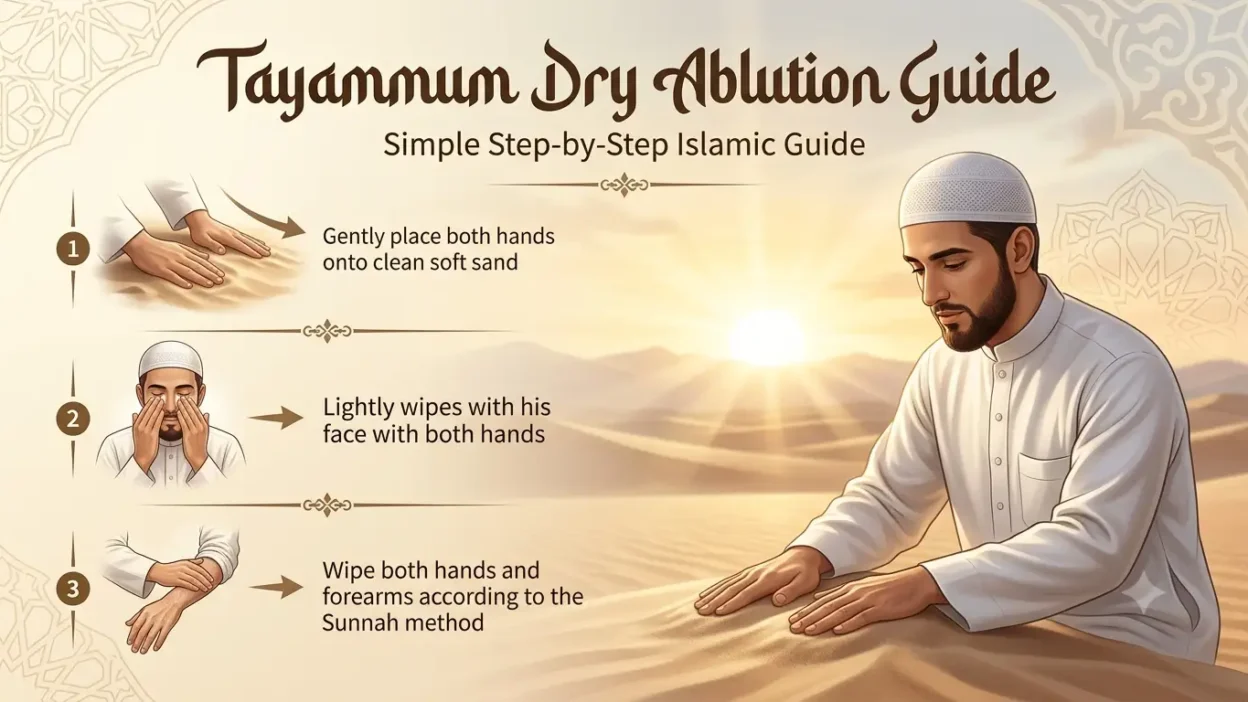
A Muslim brother once shared how he was waiting for his flight during a long journey. Prayer time arrived, but there was no easy access to water. He became worried about missing his salah.
Then he remembered something he had learned as a child: Allah SWT had made worship easy through tayammum. That moment reminded him that Islam is a religion of mercy.
If you are searching for a tayammum dry ablution guide, this article is written especially for you.
Whether you are traveling, sick, camping, facing a water shortage, or simply want to understand this important Islamic practice, learning tayammum can help you stay connected to prayer.
Tayammum is not just a replacement for wudu. It is a beautiful reminder that Allah never wants hardship for His servants. Even in difficult situations, the door of worship remains open.
In this guide, you will learn the meaning of tayammum, when it is allowed, how to perform it correctly, common mistakes to avoid, and the spiritual lessons behind this special form of purification.
What Is Tayammum?
Tayammum is an Islamic method of dry purification performed using clean earth, dust, sand, or natural soil when water is unavailable or harmful to use.
Quick Answer
Tayammum allows Muslims to perform salah when they cannot use water for wudu or ghusl.
Allah says:
“But if you are ill or on a journey and cannot find water, then seek clean earth and wipe over your faces and hands.”
(Surah Al-Ma’idah 5:6)
This verse shows Allah’s mercy and desire to make worship easy.
Why Did Allah Allow Tayammum?
Islam is a practical religion. People travel, become sick, face emergencies, and sometimes live in places where water is limited.
Allah says:
“Allah does not intend to make difficulties for you, but He intends to purify you.”
(Surah Al-Ma’idah 5:6)
Tayammum teaches us an important lesson:
Allah values sincerity and obedience more than hardship.
When Is Tayammum Allowed?
A Muslim may perform tayammum in the following situations:
1. Water Cannot Be Found
After making a reasonable effort to search for water.
2. Illness or Injury
Using water may worsen a medical condition.
3. Extremely Cold Weather
Using water could cause serious harm and no safe heating option exists.
4. Water Is Needed for Survival
For example, during travel when limited water must be saved for drinking.
5. Physical Inability
An older or disabled person who cannot use water may perform tayammum.
Materials That Can Be Used for Tayammum
Tayammum should be performed using natural and clean materials such as:
- Clean soil
- Sand
- Dust
- Stone containing natural dust
- Earth surfaces
The material must be free from impurities.
Avoid using artificial surfaces that contain no natural dust or earth.
Step-by-Step Tayammum Dry Ablution Guide
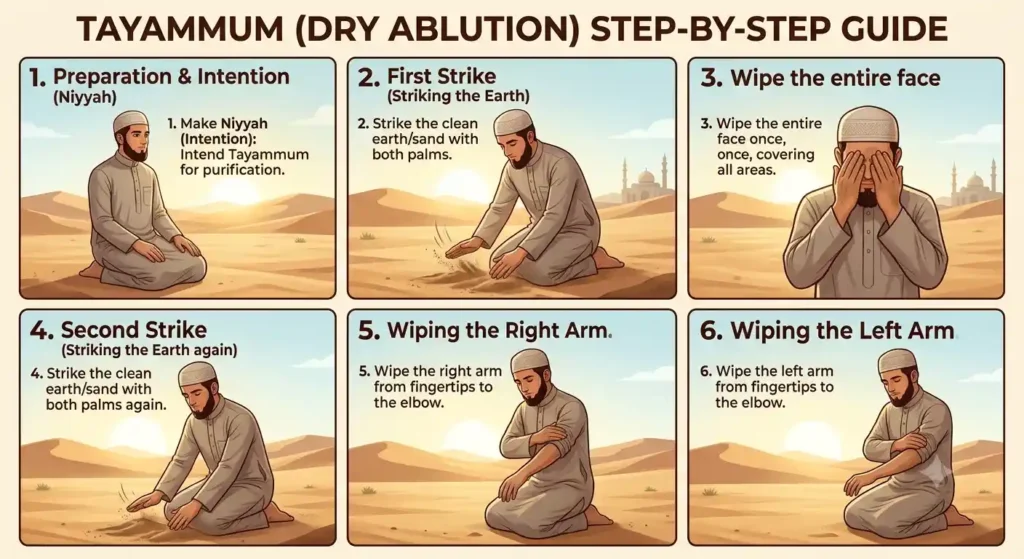
Performing tayammum is simple.
Step 1: Make the Intention (Niyyah)
Intend in your heart that you are performing tayammum for purification and prayer.
Step 2: Say Bismillah
Begin in the name of Allah.
Step 3: Touch Clean Earth
Place both palms lightly on clean earth or dust.
Step 4: Wipe the Face
Pass your hands over your entire face once.
Step 5: Wipe the Hands
Wipe both hands up to the wrists.
Your tayammum is now complete.
Evidence From the Sunnah
The Prophet Muhammad ﷺ said:
“The earth has been made for me a place of prayer and a means of purification.”
This authentic hadith highlights the mercy and flexibility of Islam.
The companions of the Prophet ﷺ also practiced tayammum during travel and difficult situations.
Conditions for a Valid Tayammum
For tayammum to be valid, several conditions should be met:
1. A Valid Reason Exists
There must be a genuine inability to use water.
2. Clean Earth Is Used
The material must be pure and natural.
3. Correct Intention
Tayammum should be performed for purification before worship.
4. Prayer Time Has Entered
According to some scholars, it is preferable to perform tayammum after the prayer time begins.
Things That Break Tayammum
Tayammum becomes invalid in the following situations:
Anything That Breaks Wudu
Examples include:
- Using the restroom
- Passing gas
- Deep sleep
- Loss of consciousness
Finding Water
If water becomes available and can be safely used, tayammum ends and regular wudu should be performed.
Common Mistakes Muslims Make During Tayammum
Many people make small mistakes because they are unfamiliar with the process.
1. Not Having a Valid Reason
Tayammum should not replace wudu for convenience.
2. Using Impure Materials
Dirty surfaces should not be used.
3. Wiping Incorrectly
The face and hands should be wiped properly.
4. Forgetting the Intention
Sincerity and intention remain important.
5. Assuming Tayammum Is Inferior
Tayammum is a valid form of purification granted by Allah Himself.
Tayammum During Modern Situations
Many Muslims wonder when tayammum may be needed today.
During Air Travel
Long flights sometimes make access to water difficult.
During Hospital Treatment
Patients with burns, wounds, or certain medical conditions may be unable to use water.
Natural Disasters
Water shortages can happen during emergencies.
Camping and Outdoor Activities
Travelers may occasionally face limited access to water.
Learning tayammum prepares Muslims for unexpected situations.
Difference Between Wudu and Tayammum
| Wudu | Tayammum |
| Uses water | Uses clean earth |
| Normal purification method | Alternative method during hardship |
| Obligatory when water is available | Allowed only under specific conditions |
| Includes washing limbs | Includes wiping face and hands |
Both are valid acts of purification when performed correctly.
Spiritual Lessons From Tayammum
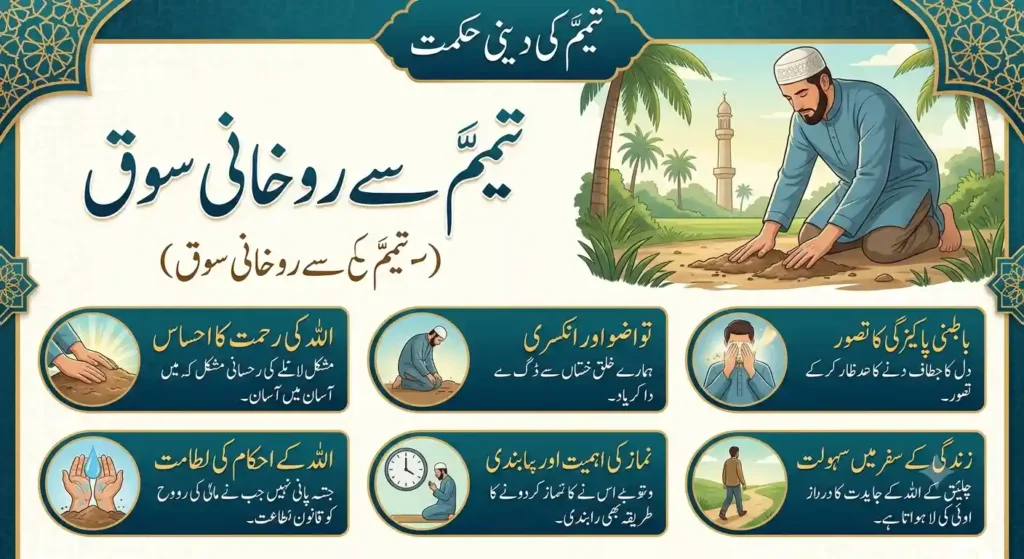
Allah Loves Ease
Tayammum reminds us that Islam is not meant to be difficult.
Worship Should Continue
Hardship should never separate a believer from salah.
Purity Begins in the Heart
External cleanliness is important, but sincerity matters even more.
Gratitude for Blessings
Many people only appreciate water after experiencing scarcity.
Trust in Allah
Every Islamic ruling contains wisdom and mercy.
Practical Tips for Every Muslim
- Learn tayammum before you need it.
- Teach it to your children.
- Remember it while traveling.
- Keep calm during emergencies.
- Never miss prayer because you think purification is impossible.
A little knowledge can help during difficult moments.
Conclusion
The tayammum dry ablution guide is a beautiful example of Allah’s mercy and compassion. Islam understands human limitations and provides practical solutions for every situation. Whether you are traveling, ill, facing a water shortage, or dealing with unexpected circumstances, tayammum allows you to continue worship without unnecessary hardship. Learning this important practice strengthens both faith and confidence. It reminds us that Allah never closes the door of worship. Make it a habit to understand the rulings of purification and teach them to your family. One day, this knowledge may help you or someone you love continue their prayers during difficult times.
May Allah SWT increase our knowledge, accept our worship, and keep our hearts attached to salah in every situation.
Ameen.
Frequently Asked Questions
1. What is tayammum in Islam?
Tayammum is a dry form of purification using clean earth when water is unavailable or harmful. It allows Muslims to pray without difficulty.
2. Can tayammum replace wudu permanently?
No. Tayammum is only a temporary alternative. Once water becomes available and can be safely used, normal wudu should be performed.
3. Can tayammum be performed on walls or stones?
Yes, if the surface contains natural dust or earth and is clean.
4. Does tayammum replace ghusl?
Yes. If someone cannot use water for ghusl because of illness or lack of water, tayammum may temporarily replace it.
5. Is tayammum mentioned in the Quran?
Yes. Tayammum is clearly mentioned in Surah An-Nisa (4:43) and Surah Al-Ma’idah (5:6).