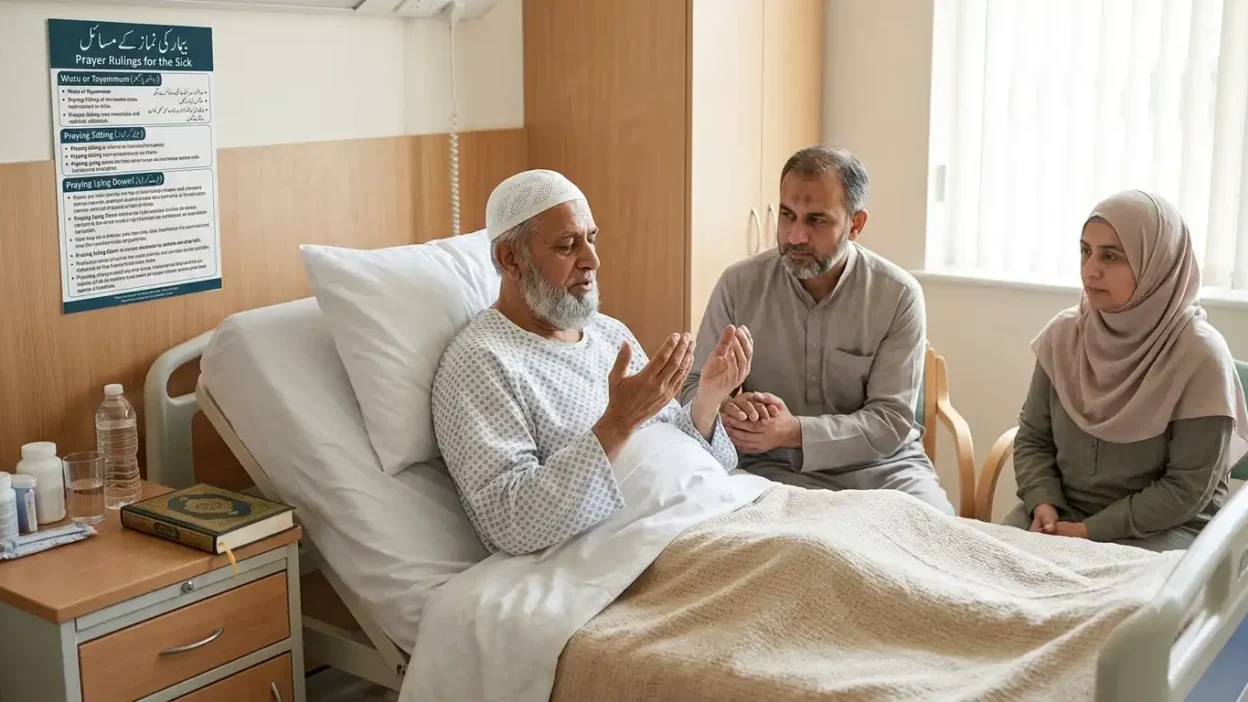
A few years ago, I visited a close friend in the hospital. The room was quiet. Family members sat nearby with worried faces. Doctors had done everything they could, yet everyone still raised their hands in prayer.
In that moment, I realized that dua gives something medicine cannot always provide: hope, peace, and trust in Allah. If you are searching for prayer for the sick rulings, this guide is written for you.
Many Muslims wonder what Islam says about praying for sick people, whether there are specific duas to recite, and what Islamic rulings apply when someone becomes ill.
Illness is part of life. Every family experiences it at some point. Islam does not leave believers without guidance during these difficult times. The Quran and Sunnah teach us to visit the sick, make sincere dua for them, seek medical treatment, and remain patient.
A heartfelt prayer may not always bring immediate healing, but it strengthens faith, comforts the heart, and reminds us that Allah’s mercy is greater than every hardship.
What Are the Islamic Rulings on Praying for the Sick?
Praying for sick people is a highly encouraged act in Islam. Scholars agree that making dua for the ill is a Sunnah and an act of mercy.
The Prophet ﷺ regularly prayed for sick companions and encouraged others to do the same.
Allah says:
“And when I am ill, it is He who cures me.”
(Quran 26:80)
This verse reminds us that doctors, medicine, and treatment are means, but ultimate healing comes from Allah alone.
Making a short prayer for the sick can be done anywhere. You can pray at home, in a hospital, after salah, or even for someone living far away.
Quranic Guidance About Illness and Healing
The Quran teaches believers to remain patient during hardship.
Allah says:
“Seek help through patience and prayer.”
(Quran 2:45)
Sickness often becomes a time when people grow closer to Allah. Many scholars explain that illness can remove sins and increase a person’s rank in the Hereafter.
Another beautiful reminder is:
“Indeed, with hardship comes ease.”
(Quran 94:6)
These verses provide comfort to both patients and their families. They remind us that difficult times do not last forever and that Allah’s mercy always remains near.
Authentic Dua for a Sick Person
One of the most authentic healing supplications taught by the Prophet ﷺ is:
Arabic
اللَّهُمَّ رَبَّ النَّاسِ أَذْهِبِ الْبَأْسَ، اشْفِ أَنْتَ الشَّافِي، لَا شِفَاءَ إِلَّا شِفَاؤُكَ، شِفَاءً لَا يُغَادِرُ سَقَمًا
Transliteration
Allahumma Rabb an-nas, adhhib al-ba’s, ishfi anta ash-Shafi, la shifa’a illa shifa’uka, shifa’an la yughadiru saqama.
Meaning
O Allah, Lord of mankind, remove the suffering and grant healing. You are the Healer. There is no healing except Your healing, a healing that leaves no illness behind.
This is considered a powerful prayer for the sick because it directly asks Allah for complete recovery.
Ruling on Visiting the Sick in Islam
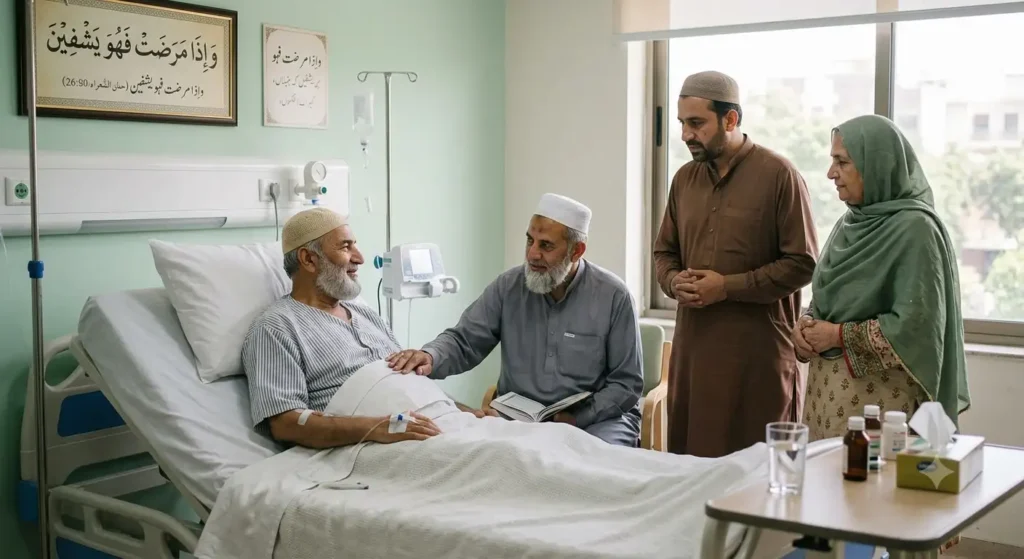
Visiting sick people is one of the beautiful rights Muslims have over one another.
The Prophet ﷺ said:
“Feed the hungry, visit the sick, and free the captive.”
(Sahih al-Bukhari)
Visiting a patient brings comfort and reduces feelings of loneliness.
Islamic etiquette when visiting the sick includes:
- Keep the visit short.
- Speak kindly and positively.
- Make dua for the patient.
- Avoid discussing frightening stories or negative outcomes.
- Encourage hope in Allah’s mercy.
A gentle smile and sincere prayer can greatly uplift a person who is suffering.
Can You Pray for a Sick Person From Far Away?
Yes. Islam encourages making dua even when the sick person is not physically present.
The Prophet ﷺ taught that when a Muslim prays sincerely for another Muslim in their absence, angels say:
“And for you it is the same.”
(Sahih Muslim)
This means your dua benefits both the patient and yourself.
If a friend, parent, or relative lives far away, never think your prayer has less value. Allah hears every sincere supplication regardless of distance.
This makes a daily prayer for the sick a beautiful habit.
Ruling on Seeking Medical Treatment
Some people mistakenly think that relying on Allah means avoiding doctors or medicine. Islam teaches balance.
The Prophet ﷺ said:
“Seek treatment, for Allah has not created a disease except that He has also created its cure.”
(Abu Dawud)
Seeking medical care is encouraged and does not weaken tawakkul (trust in Allah).
A believer combines:
- Prayer
- Patience
- Medical treatment
- Hope in Allah
Medicine treats the body, while prayer comforts the heart and strengthens faith.
Ruqyah and Spiritual Healing in Islam
Islam allows reciting Quranic verses and authentic supplications for healing.
Commonly recited chapters include:
- Surah Al-Fatihah
- Ayat al-Kursi
- Surah Al-Ikhlas
- Surah Al-Falaq
- Surah An-Nas
Ruqyah should only contain Quranic verses and authentic duas.
Muslims should avoid:
- Superstitions
- Amulets with unknown writings
- Unverified healing practices
- Fabricated supplications
A spiritual prayer for the sick should always remain within Islamic teachings.
Prayer for Strength During Illness
Illness affects not only the body but also emotions and mental well-being.
Prayer
O Allah, this sickness feels heavy, but Your mercy is greater than every pain. Grant strength to the one who is suffering. Replace fear with peace and weakness with patience. Ease every difficult night and every painful moment. Help them feel Your closeness and remind them that they are never alone. Bless their family members who care for them and reward them for every act of kindness. If healing is near, make it easy and complete. If this trial continues, grant them endurance and hope. Fill their heart with trust in Your wisdom and mercy. Ameen.
Prayer for Family Members Caring for the Sick
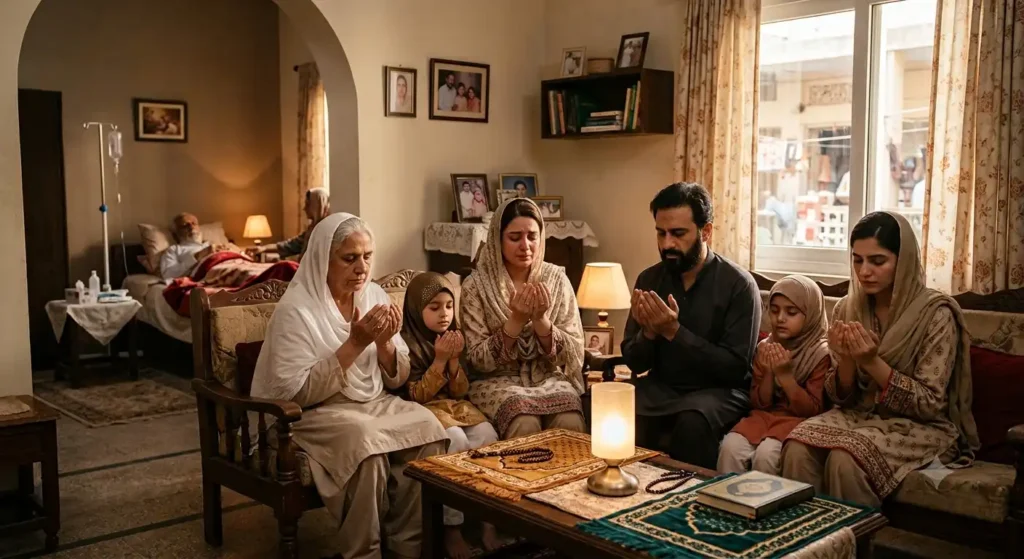
Caregivers often carry emotional and physical burdens.
Prayer
Dear Allah, bless those who spend their days and nights caring for loved ones. Give them patience when they are tired and comfort when they feel worried. Reward every tear, every prayer, and every sacrifice they make. Protect them from exhaustion and sadness. Help them remain gentle and hopeful during difficult moments. Let their kindness become a source of immense reward in this life and the next. Bring healing to the patient and peace to everyone involved in their care. Fill their home with mercy, strength, and faith. Ameen.
Lessons Muslims Learn Through Illness
Sickness often teaches valuable lessons.
1. We Remember Our Dependence on Allah
Good health is a blessing that many people notice only after becoming ill.
2. We Become More Grateful
Illness reminds us to appreciate simple blessings.
3. We Increase in Patience
Trials often strengthen faith and character.
4. We Become More Compassionate
Experiencing pain helps us understand the struggles of others.
5. We Draw Closer to Allah
Many people increase their prayers and remembrance during times of sickness.
The Prophet ﷺ said:
“No fatigue, illness, anxiety, sorrow, harm, or distress befalls a Muslim except that Allah expiates some of his sins because of it.”
(Sahih al-Bukhari)
This hadith offers tremendous hope to anyone going through illness.
Conclusion
Illness can be one of life’s hardest tests, but Islam teaches that it can also become a source of mercy, purification, and spiritual growth. The prayer for the sick rulings remind believers to combine sincere dua with patience, compassion, and proper medical care. Whether you are praying for yourself, a parent, a spouse, a child, or a friend, remember that Allah hears every whispered prayer. Never underestimate the power of raising your hands and asking Him for healing. Make dua a daily habit. Visit the sick when possible, support them with kind words, and continue trusting in Allah’s wisdom. Sometimes healing comes quickly, and sometimes Allah gives strength to endure the test. No pain lasts forever, and no sincere prayer is ever ignored by Allah.
May Allah grant healing to every sick person, remove their suffering, forgive their sins, and replace hardship with comfort, peace, and complete recovery. Ameen.
Frequently Asked Questions
1. What is the best dua for a sick person?
One of the best duas is:
Allahumma Rabb an-nas, adhhib al-ba’s, ishfi anta ash-Shafi.
This authentic supplication asks Allah for complete healing.
2. Is visiting sick people mandatory?
Visiting the sick is not obligatory, but it is a highly recommended Sunnah and brings great rewards.
3. Can I make dua for someone who lives far away?
Yes. Islam encourages praying for others in their absence, and angels make the same prayer for you.
4. Does making dua replace medical treatment?
No. Islam encourages both prayer and seeking treatment. Muslims should rely on Allah while using available medical means.
5. Can sickness remove sins?
Yes. Authentic hadith mention that illness and hardships can become a means of forgiveness and purification for believers.